[ Ads library ]
Meta and TikTok ads, ranked by what can be checked
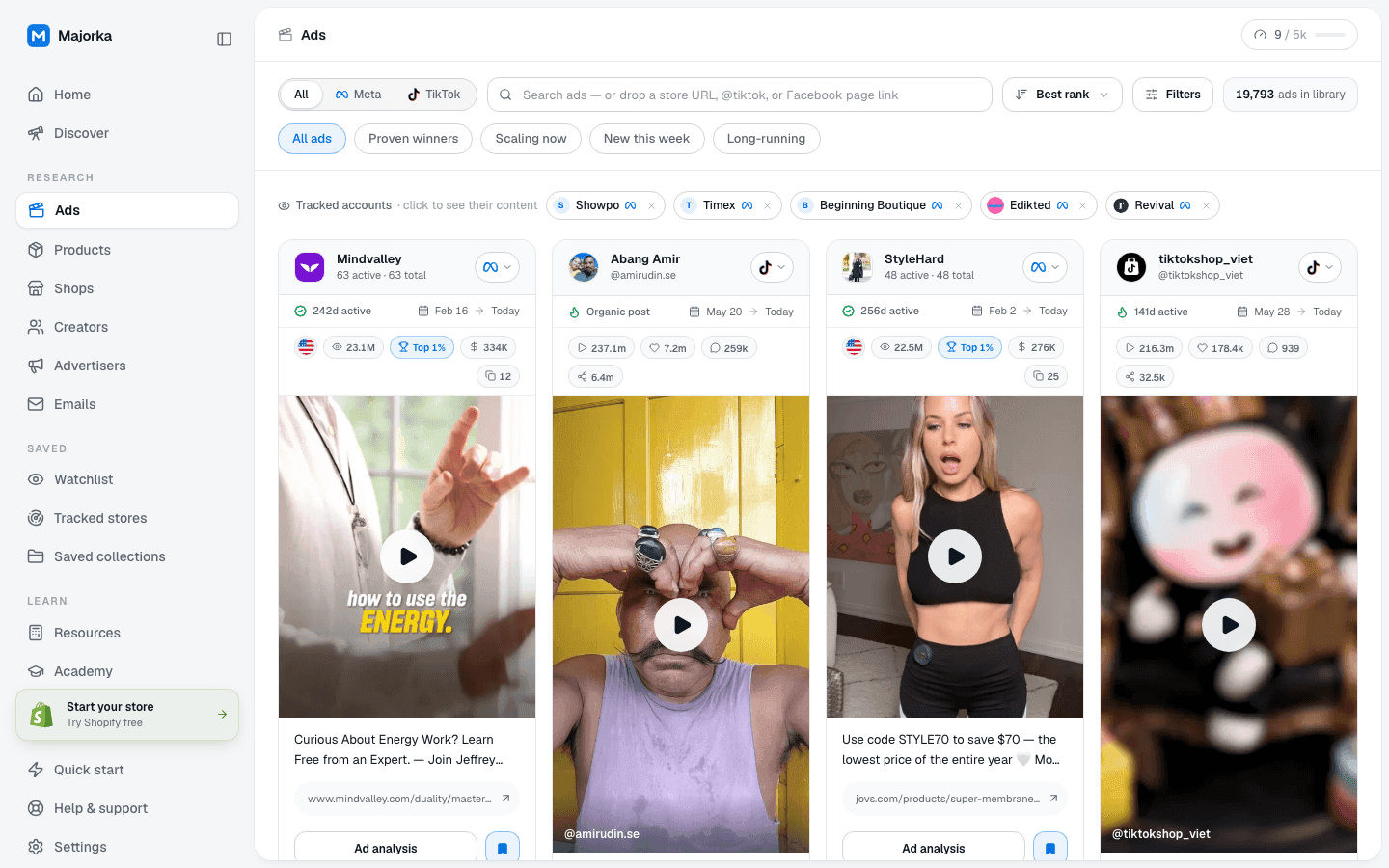
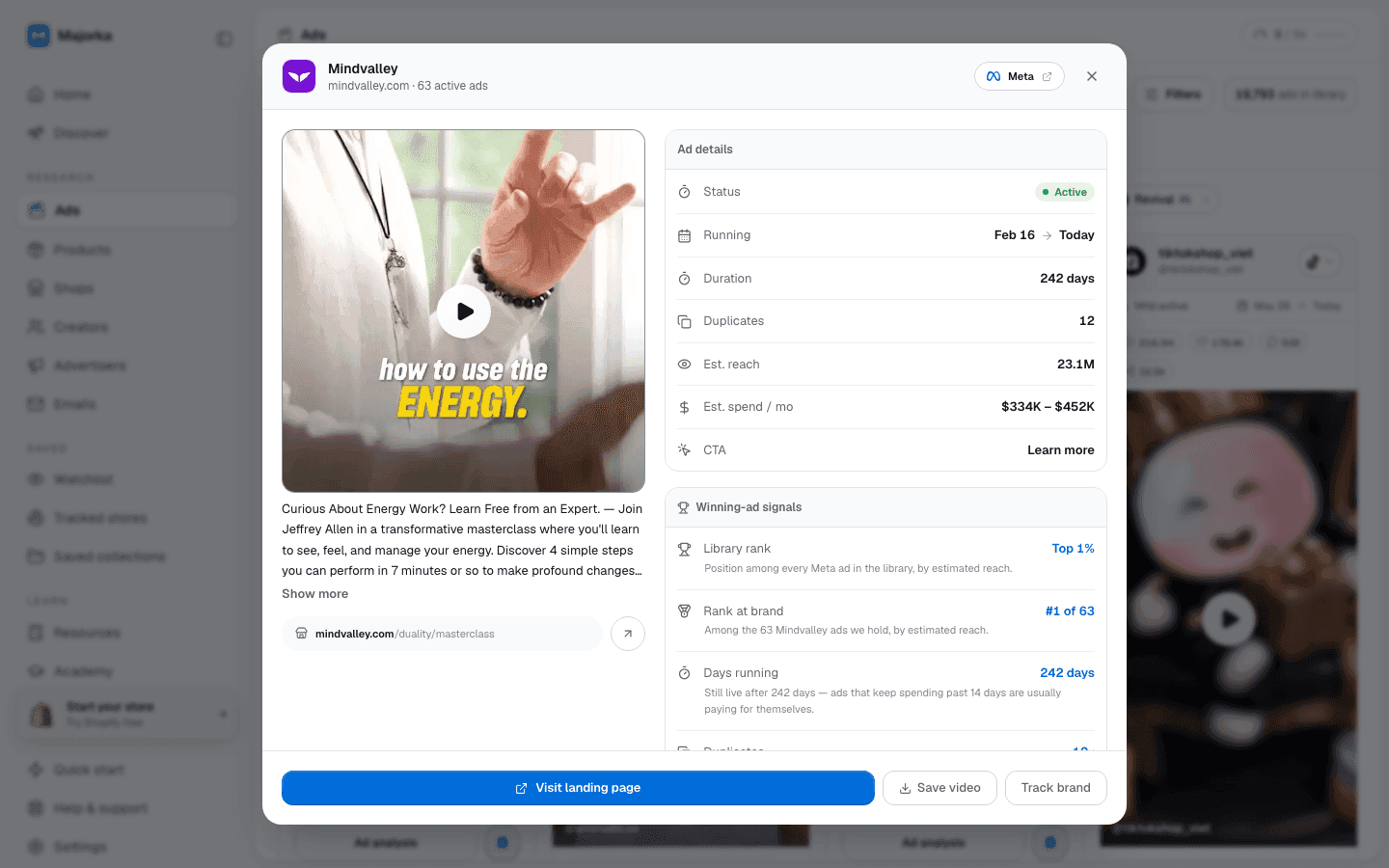
Every Meta ad links to its own Ad Library page. Days running, duplicates and the rank by reach sit on the card, so you read a winner from evidence, not from a badge.
[ Core capabilities ]
What Ads library does
Top 1%, 5%, 10% or 25% of the Meta library by reach, plus the ad’s rank within its own brand. Past 25% there is no label.
[ How you use it ]
Ads library, in four steps
- 01
Start from a preset
Long-running shows ads that have been paid for the longest; Scaling now shows young ads with many variants. Both are definitions you can read, not a mood.
- 02
Tighten with days and duplicates
Set Days running to 14+ and Duplicates to 2+ to keep only creatives the advertiser has kept live and re-used. Add Top 25% rank to drop the long tail.
- 03
Open the ad
The detail shows the winning-ad signals with their basis, the landing page, the primary text and the transcript. The Meta pill opens the same ad in Meta’s Ad Library.
- 04
Track or save
Track brand puts the advertiser in your tracker; the bookmark files the ad into a collection. Paste a store URL, @handle or Facebook page link into the search to pull an advertiser live.
[ What’s measured vs estimated ]
Every number on this surface, with where it comes from
Where there is no measurement, the product shows nothing rather than a guess. The labels below are the ones on screen.
- MeasuredA count or a value read from the source.
- EstimatedDerived where the platform discloses nothing; labelled est.
- ModelledComputed from a stated method; carries an info hint.
- Days running / Running
- From the day Majorka first indexed the ad to the last day it was seen running. First seen is our index date, not the advertiser’s launch date.
- Duplicates
- Meta’s own collation count for the creative.
- Status
- Active or inactive as captured at the last crawl.
- Library rank / Top X%
- An ordinal over the reach figure we hold: by Meta-reported reach when disclosed, by estimated reach otherwise. The basis is printed next to every rank.
- Est. reach
- Real only for Meta’s EU transparency set (marked); otherwise estimated from platform count, duration, page likes and variant count.
- Est. spend / mo
- Modelled from ad reach, placement mix and niche CPM benchmarks.
- TikTok views, likes, comments, shares
- As reported by TikTok for the post at crawl time.
[ Keep going ]
Related features and free tools
- FeatureStore trackerTrack any advertiser and get its new ads, testing batches, landing pages, opening lines and stack on one page, with a +N new since you last looked pill that does the remembering for you.Open
- FeatureCreatorsReal accounts pulled from the posts we index, ranked by followers, average views, engagement or posting volume, with the one estimated panel labelled as estimated.Open
- Free toolCompetitor ads finderActive Meta ads for a domain, from our own index.Open
- Free toolHook generatorOpening lines built from ads that lasted.Open
That the ad sits in the top 1% of every Meta ad in the library when sorted by reach. Reach is Meta-reported where Meta discloses it and estimated elsewhere, and the card says which. There is no label past Top 25%, because being in the top half of a library is not a signal.
No. We keep no reach history, so a trend arrow would be invented. Days running, duplicates and the rank are the signals we can stand behind.
Meta ads are pulled from Meta’s Ad Library by advertiser page and TikTok posts from public search, both on a ten-minute ingest cycle. Every Meta card carries a link to the ad’s own Ad Library page.
Yes. Paste a store URL, an @handle or a Facebook page link into the search. Live pulls count as lookups against your plan allowance; browsing the library does not.
Duplicates is the number Meta reports for creatives it collates together. The winner and scaling tags use the variant count behind the same figure. Neither is something we compute.